

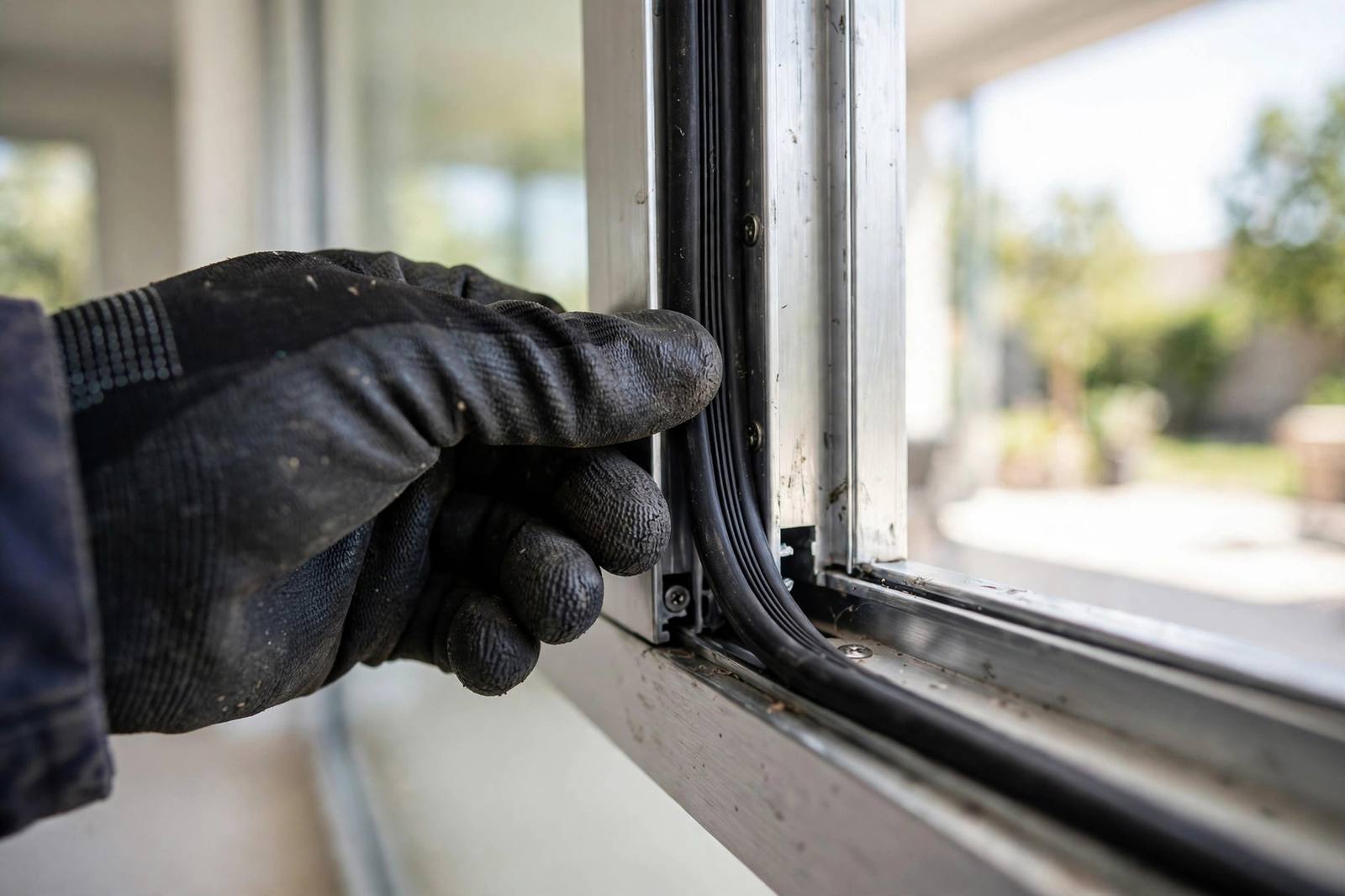
Most noise does not come through the glass. It comes through the gaps around it — and the seals that are supposed to close those gaps give up long before the door or window does. Weather strips are the fix we fit most often, because they solve the actual problem.
The gap problem
Hold your hand near the edge of a closed sliding door on a windy day. If you feel air, you have found your noise leak. Sound travels with air — every gap that lets in dust lets in traffic, voices, and construction noise at full volume. In Dubai homes the culprit is usually the sliding door or an openable window that no longer closes tight.
Why the original seals give up
The seals fitted at installation are thin rubber or brush strips. Heat hardens them, dust grinds them, and daily sliding wears them flat. Within a few years they sit in the frame doing nothing — the door looks closed, but around its edges it is effectively open a few millimetres all round.
What weather strips do differently
Weather strips are compressible seals fitted into the frame channels. When the door or window closes, they squash into the gap and stay in contact with the moving panel. Unlike the original seals, they keep their shape and keep pressing — which is what actually blocks the air path that carries noise.
Where we fit them
- Sliding glass doors and sliding windows
- Hinged doors that have dropped or warped slightly
- Openable windows with worn perimeter seals
What changes after
Less noise, obviously — but customers usually notice the dust first. A door that seals against air seals against fine Dubai dust too, which means less cleaning and a room that holds its cool air. See our window soundproofing service for the full picture.
Book your visit
Call or WhatsApp 055 873 4201 or email parkaluminium@gmail.com. Send a photo of the door or window and tell us your area — we reply with a clear quote and a time slot.
