

Dubai dust finds every gap. If your cat flap insert panel is fitted but not sealed, you will know about it the first time a shamal blows through JVC or the dust haze settles over the Marina. The good news: sealing is simple and it makes a big difference.
A well-sealed panel keeps the cool air in and the dust out, so your AC is not fighting a constant leak. Every cat door for sliding glass door we fit gets sealed as standard, but here is what good sealing actually involves.
Where the gaps hide
- Panel to track. The top and bottom edges of the insert panel meet the track, and this is the main path for dust.
- Panel to door. Where the insert panel meets your sliding door, a slim gap can let in fine dust.
- Flap frame to panel. The cat flap frame itself needs a clean, sealed seat in the panel cut-out.
- The flap itself. The swinging flap should close flat against its frame every time.
What good sealing looks like
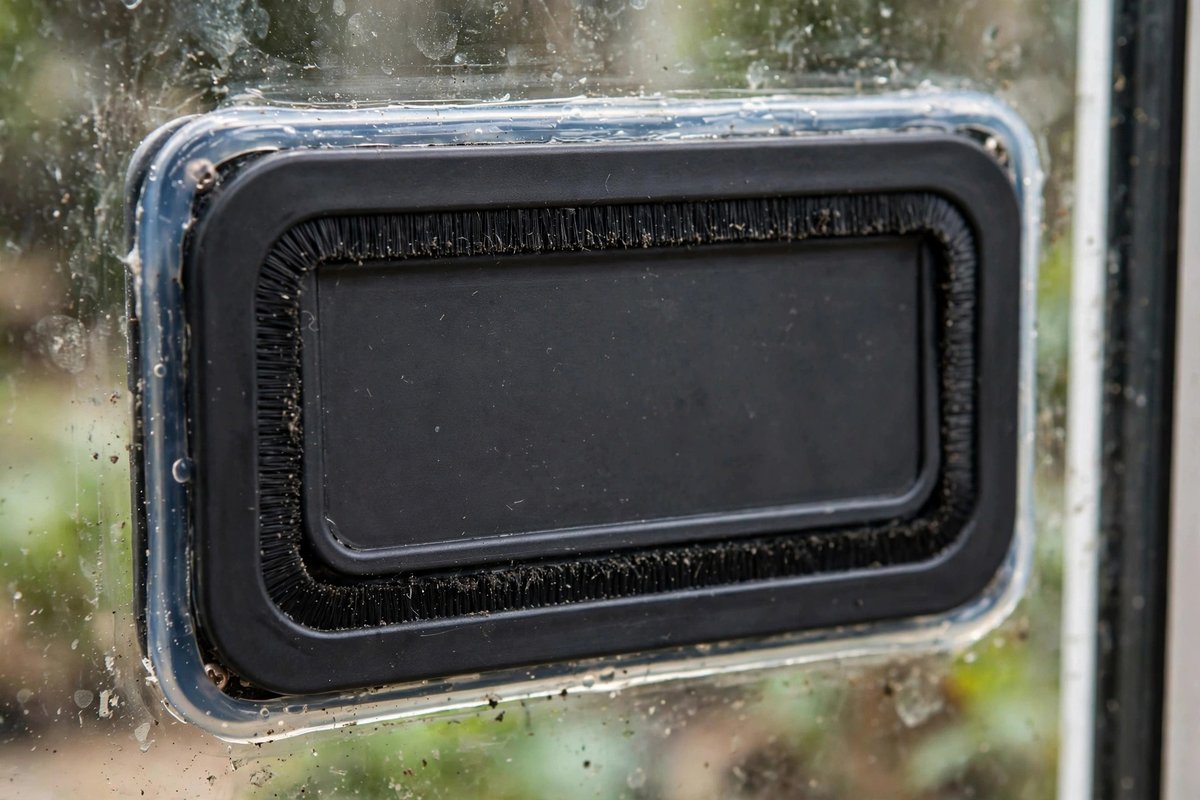
Brush seals run along the panel edges where it meets the track, blocking dust while still letting the door slide. Foam compression strips close the panel-to-door gap. Around the flap frame, a neat bead of sealant stops draughts without gluing anything permanently.
Signs your seals need attention
If you can feel warm air pushing through around the panel, or you see a dust line building up on the floor by the door, the seals have shifted or worn. A quick reseal takes minutes and restores the barrier. Check the brush seals once a year, especially after the dusty summer months.
New to the whole idea? Start with our renter’s guide to cat flaps for sliding glass doors.
Want this done in your home? Call or WhatsApp Park Aluminium and Glass on 055 873 4201 and we will take it from there.
